Where are you today?
Select the scenario that best matches your workplace. Scenarios are archetypes—choose the closest match. You can adjust later.
What this affects: This determines which levers are shown as your baseline vs accelerators.
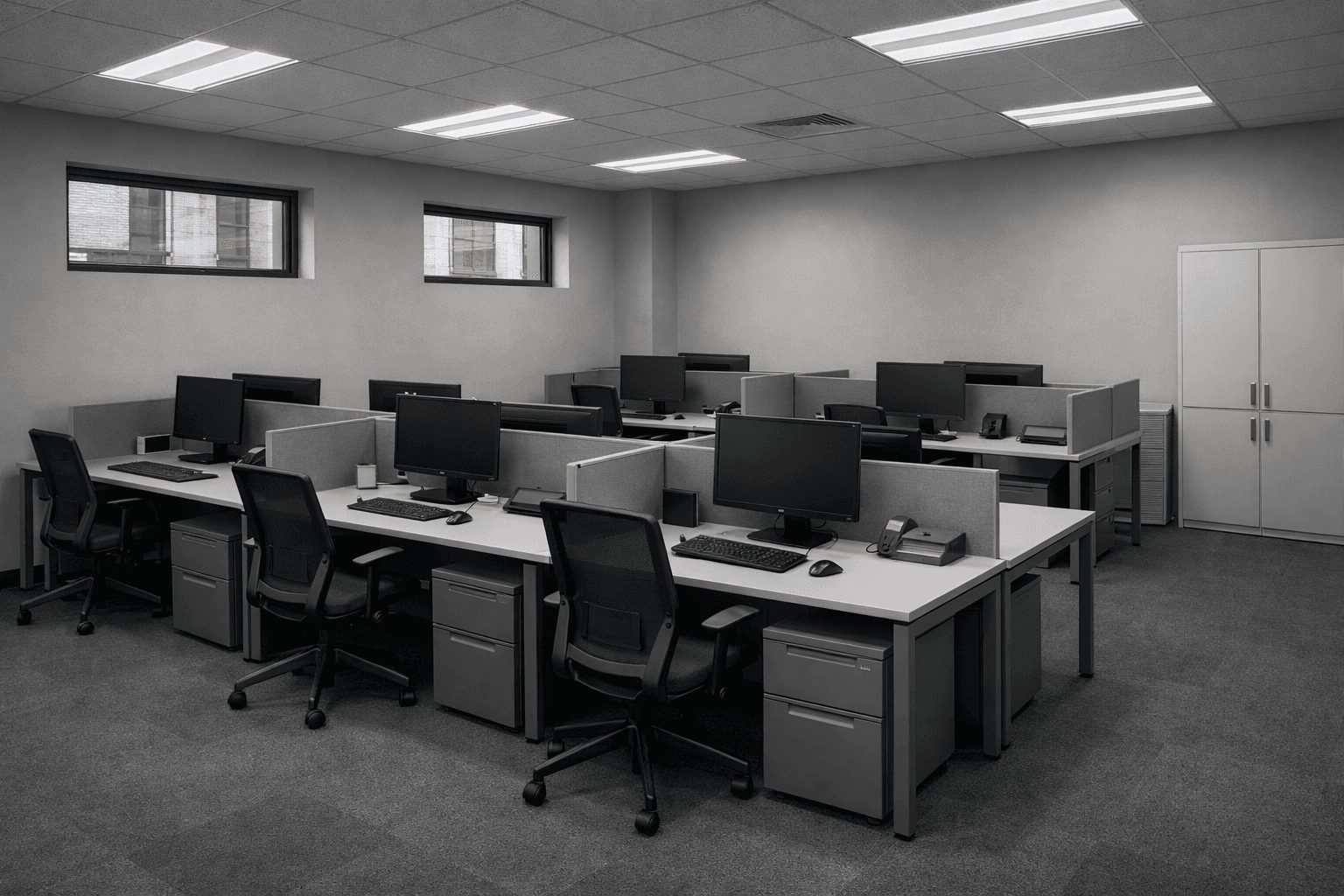
Scenario 1: Nature-Deprived Office
Your office feels functional but "sealed off" from the living world. People spend the day looking at grey walls, white desks, and glowing screens. There is no "soul" to the space—it's just a place to process tasks.
- •Minimal or no natural elements present
- •Artificial lighting is the primary light source
- •Limited or no views to the outside environment
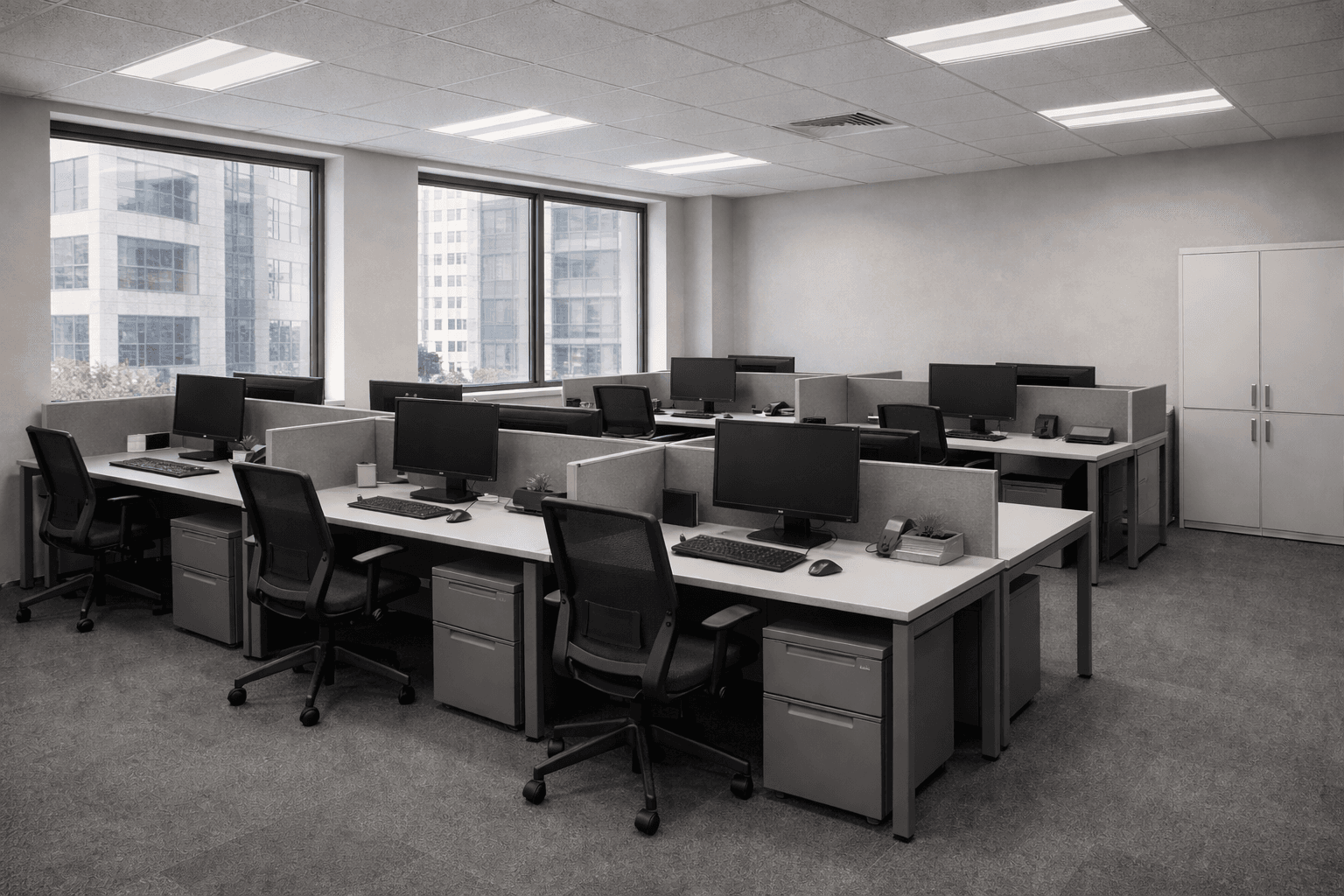
Scenario 2: Daylight Office with Urban Outlook
You have windows and daylight, but what you see is mainly the city: streets, buildings, parking, traffic. The office might be modern and clean, but it doesn't feel "green." Nature isn't really present—only the fact that there are windows inviting in daylight.
- •Natural daylight is available
- •Views to urban environment are present
- •Limited interior nature integration
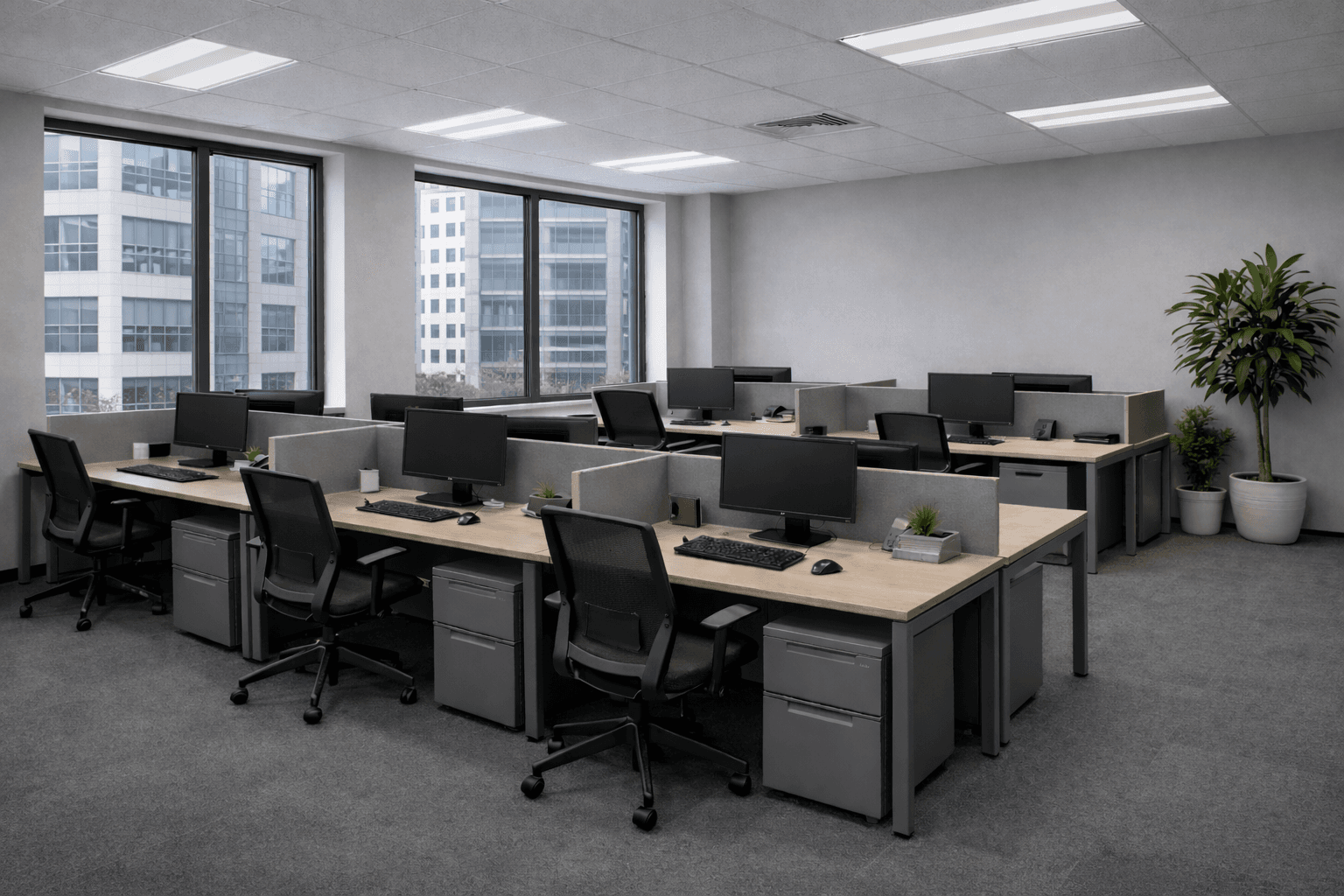
Scenario 3: Early Biophilic Adoption
Nature is starting to show up in your workplace—maybe you've added a real set of plants, or some teams have a partial green view, or there's a nearby park people occasionally use. It's a real start, but it's not consistent across the office and not yet "designed as a system."
- •Some biophilic elements are present but not systematic
- •Partial nature integration across different areas
- •Early adoption phase with room for expansion
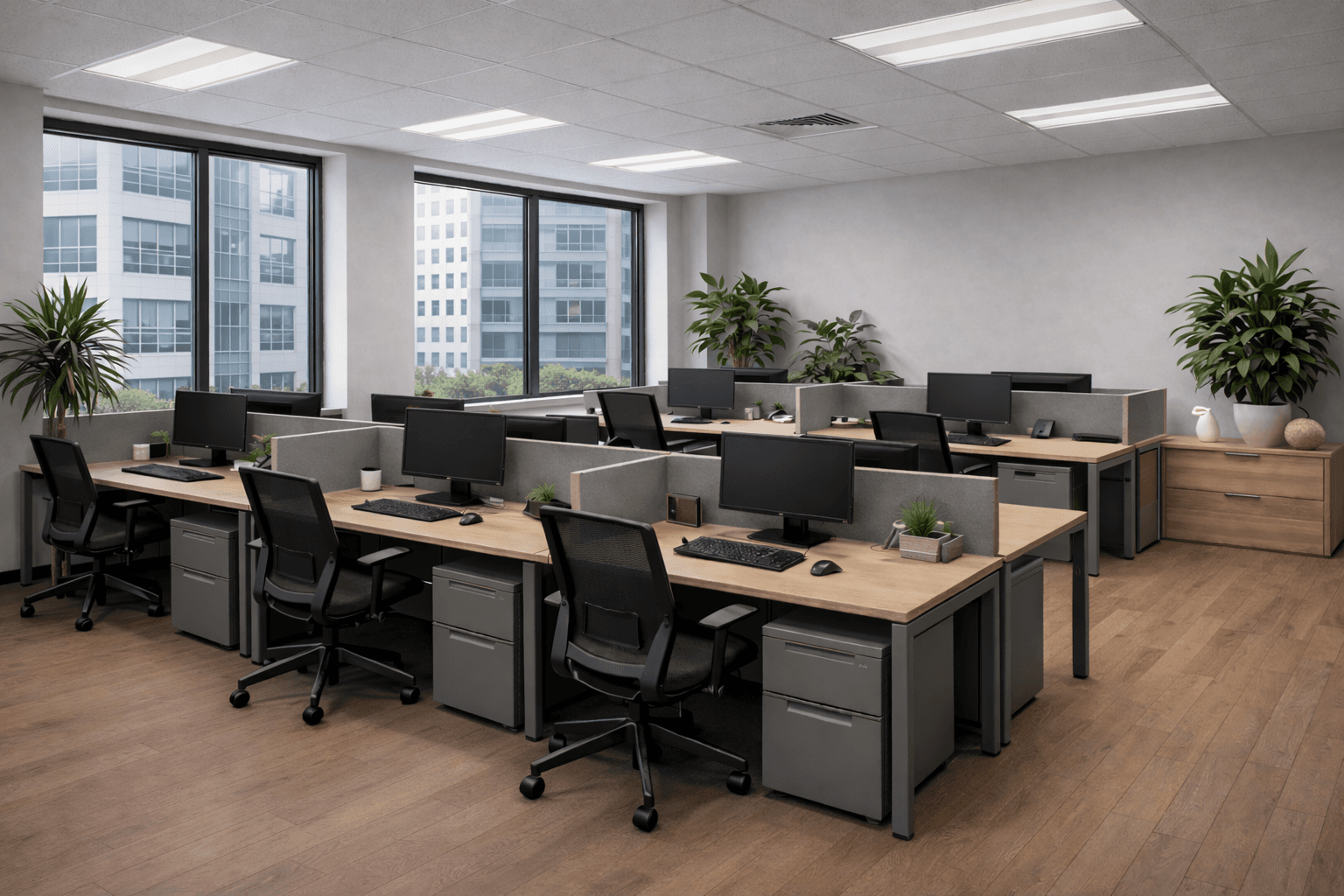
Scenario 4: Nature-Rich Workplace
Nature is already a strong part of your work environment. People can see green (or get to it easily), indoor greenery is noticeable, and the office has a more restorative feel than typical workplaces. The next step isn't "add a plant"—it's optimizing quality, balance, and experience.
- •Green elements are visible and easily accessible
- •Indoor greenery is noticeable throughout the workspace
- •Office environment has a restorative, nature-integrated feel
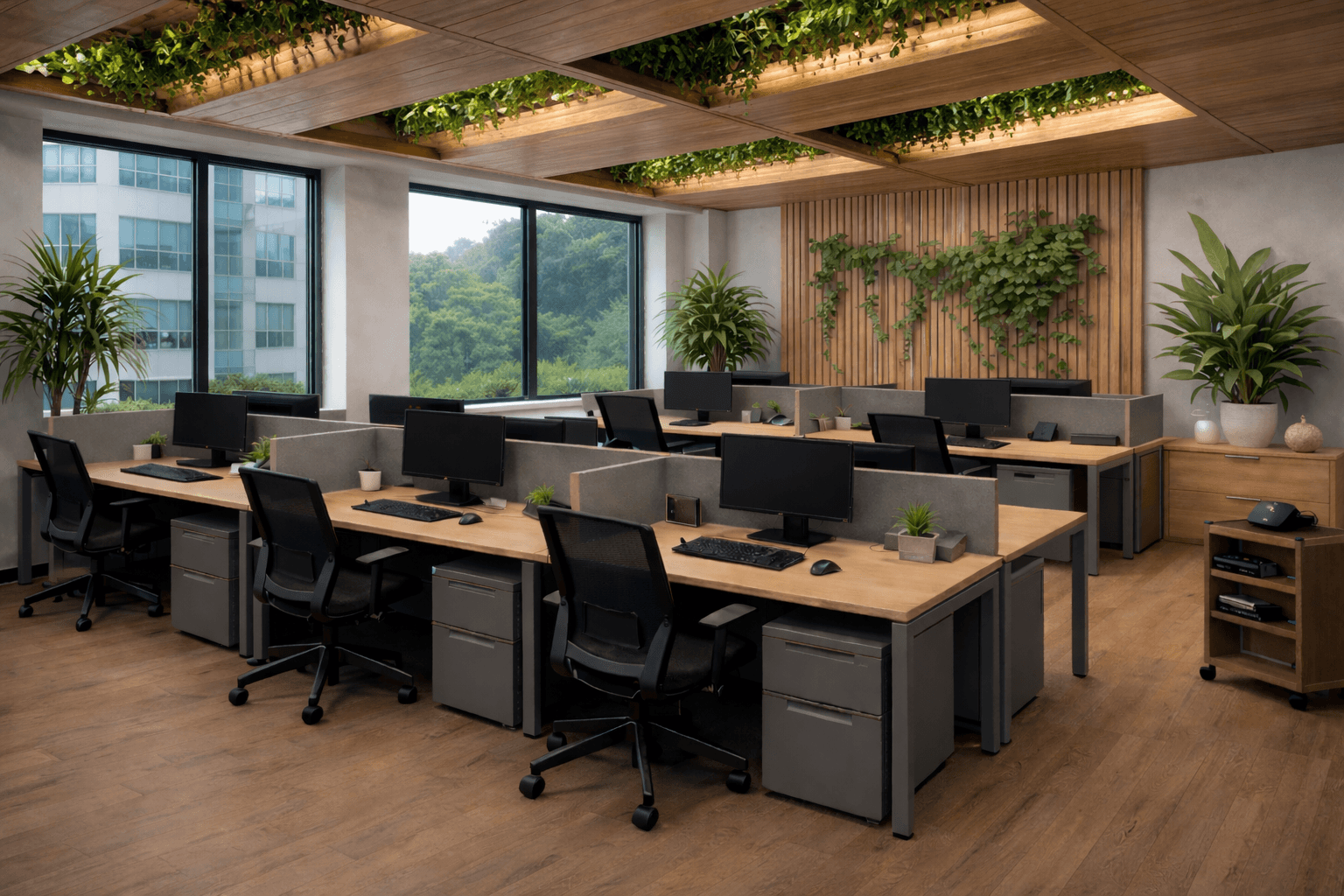
Scenario 5: Biophilic Flagship
This is a workplace where biophilic design is part of the identity. Nature isn't an add-on—it's integrated into how the office looks, feels, and is experienced. Greenery, views, materials, and sensory comfort work together. It's the kind of office people describe as "restorative" or "designed for wellbeing."
- •Biophilic design is integrated into the workplace identity
- •Greenery, views, materials, and sensory comfort work together as a system
- •Workplace is described as restorative and designed for wellbeing